Development of Controller Systems
The Heart of the Modern CNC System
The CNC controller is now the core of every production system. Its role is no longer just to execute program commands but also to intelligently optimize tool paths, monitor machining processes, and adjust parameters in real time. With features such as Dynamic Precision, Active Chatter Control, and Adaptive Feed Control, modern controllers can significantly improve surface quality, reduce tool wear, and shorten cycle times.
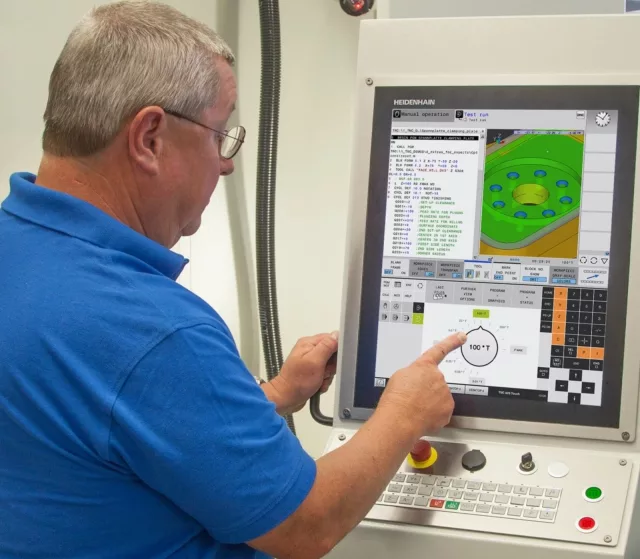
HMI Evolution
The Human Machine Interface (HMI) has undergone a complete transformation. Traditional keypads and monochrome displays have been replaced by high-resolution multi-touch screens that allow intuitive machine operation—much like using a smartphone. Advanced graphical functions now enable direct contour drawing, virtual toolpath simulation, and 3D visualization of the workpiece before physical machining begins.
Connectivity and Digital Integration
Modern CNC controllers are a key building block of smart factories. Through network integration via Ethernet, OPC UA, or MQTT, they enable bidirectional communication with MES/ERP systems, real-time machine monitoring, and rapid response to irregularities. Features such as StateMonitor allow remote production monitoring, paving the way for full digital traceability and smart maintenance.
Safety and Component Protection
The new generation of controllers also includes features for protecting machine components. Systems like Component Monitoring analyze spindle and axis loads in real time, detect anomalies, and alert operators to potential excessive wear. In case of collisions with a part or fixture, systems like Collision Protection safeguard measuring probes and mechanical components using predetermined breaking points and thermal separation.
A Glimpse into the Future
With the introduction of digital twins, artificial intelligence, and advanced machine learning algorithms, CNC controllers are becoming increasingly autonomous and predictive. Their role is no longer limited to command execution—they are actively involved in decision-making and production optimization processes.